

Text Neck: How Screen Time Is Causing Chronic Pain

Text Neck: How Screen Time Is Causing Chronic Pain

Text Neck: How Screen Time Is Causing Chronic Pain

Text Neck: How Screen Time Is Causing Chronic Pain

In today’s digital world, screens are unavoidable. From working on laptops and scrolling on smartphones to streaming shows and answering emails, the average person spends hours each day looking down at a device. While technology keeps us connected and productive, it’s also contributing to a growing health issue known as “text neck.” The good news is with the right treatment plan and guidance from an experienced physical therapist like Dr. Leon Pan, text neck is highly treatable.
What Is Text Neck?
Text neck refers to repetitive strain and injury to the neck caused by prolonged forward head posture while looking at a phone, tablet, or computer. When you tilt your head forward, the weight placed on your cervical spine increases dramatically.
Your head weighs about 10-12 pounds in a neutral position. But when tilted forward at a 45-degree angle, the pressure on your neck can feel like 40-50 pounds. Over time, this excessive strain can lead to muscle imbalances, inflammation, disc compression, and chronic pain.
Common Symptoms of Text Neck
Text neck doesn’t usually appear overnight. It develops gradually and can worsen if ignored. Common symptoms include:
- Persistent neck stiffness or soreness
- Upper back and shoulder pain
- Headaches originating from the base of the skull
- Reduced range of motion in the neck
- Tingling or numbness in the arms
- Poor posture that becomes difficult to correct
Many patients assume their discomfort is simply part of modern life. However, untreated text neck can lead to long-term spinal degeneration and chronic musculoskeletal issues.
Why Screen Time Is the Main Culprit
Modern lifestyles encourage prolonged sitting and screen use. Whether you're working remotely, commuting while scrolling, or relaxing with social media at night, your neck often remains in a forward-flexed position for hours at a time.
Contributing factors include:
- Poor workstation ergonomics
- Holding phones below eye level
- Slouching while sitting
- Lack of regular movement breaks
- Weak postural muscles
Without intervention, the body adapts to this forward position, reinforcing muscle imbalances and joint strain.
How Physical Therapy Can Help
At NYC Empire Physical Therapy, Dr. Pan takes a comprehensive approach to treating text neck. Rather than simply addressing symptoms, we focus on correcting the underlying biomechanical issues causing pain.
Your treatment plan may include:
- Postural Assessment and Correction: We evaluate how you sit, stand, and move throughout the day. Small adjustments to posture can significantly reduce spinal stress.
- Targeted Strengthening Exercises: Weak deep neck flexors and upper back muscles contribute to forward head posture. Strengthening these areas restores balance and support.
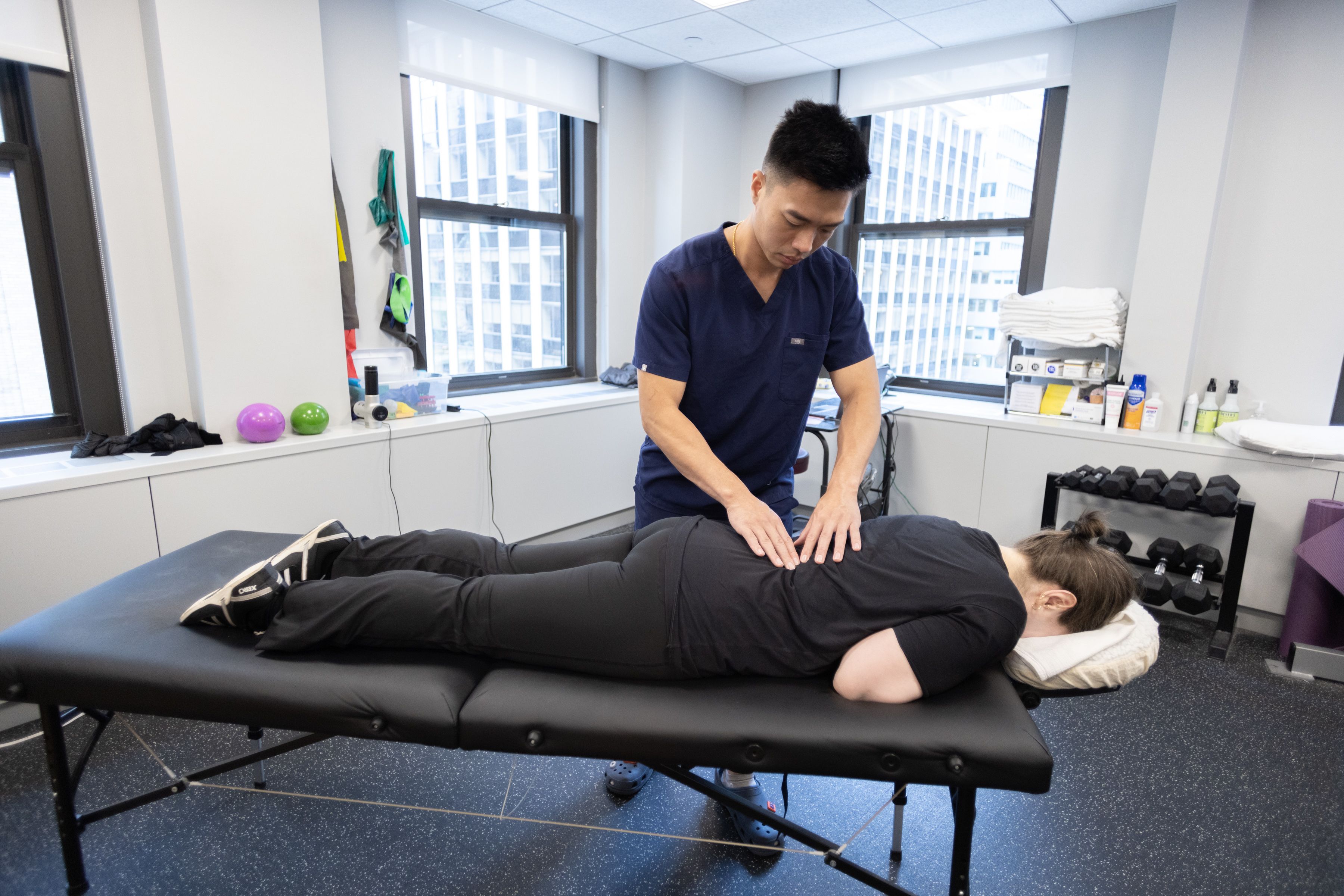
- Manual Therapy: Hands-on techniques help relieve muscle tension, improve joint mobility, and reduce inflammation.
- Stretching Tight Muscles: The chest, upper trapezius, and levator scapulae muscles often become tight with prolonged device use. Guided stretching restores flexibility.
- Ergonomic Education: We provide practical, real-world strategies to improve your workstation setup and daily habits to prevent recurrence.
Correct Your Posture Before It Gets Worse
Text neck may be a modern problem, but chronic pain doesn’t have to be your new normal. Prolonged screen time can silently damage your posture and spine - but with proper care, it’s completely manageable. We combine expert evaluation, hands-on treatment, and personalized exercise programs to help you move comfortably again.
If screen-related neck pain is affecting your daily of life, schedule a consultation at NYC Empire PT and take the first step toward lasting relief. Visit our office in New York, NY, or call (718) 608-7645 to book an appointment today.


Monday, Wednesday & Friday
09:00 AM to 3:00 PM
Tuesday & Thursday
12:00 PM to 7:00 PM
Saturday & Sunday
Closed
Powered by 